

 Français
  English
 Español
Game entry
Strider
1989 · Platformer, Arcade · DOS, PlayStation, Wii, Wii U, Master System, Mega Drive, Atari ST, Commodore 64, Amiga, Arcade, ZX Spectrum, Amstrad CPC, Sharp X68000 · Capcom
Strider carries 1,461 ELO points on GameForever and holds position no. 2,818 in the world ranking, with 42% of duels won out of 57 played. Its best rank by family puts it at no. 12 out of 23 (1989).
World rank
no. 2,818
ELO score
1,461
Wins
42%
Duels played
57
About Strider
The controls of Strider consist of an eight-way joystick and two action buttons for attacking and jumping. The player controls Hiryu himself, whose main weapon is a tonfa-like plasma sword known as "Cypher". He can perform numerous acrobatic feats depending on the joystick/button combination used. Pressing the jump button while Hiryu is standing still will cause him to do a regular vertical jump, while pressing the jump button while pushing the joystick left or right will enable him to do a cartwheel jump. Hiryu can also slide under or through certain obstacles and enemies by first crouching down and then pressing the jump button. As well as his sliding move, both jumps can also be used to destroy weaker opponents. Hiryu is able to latch onto certain platforms, and climb across walls and ceilings using a metallic hook. While running down a sloped surface, Hiryu can gain enough momentum to allow him to do a longer cartwheel jump than usual.
Numerous power-ups can be obtained from item boxes carried by certain enemies. These includes an extension to Hiryu's attack range that lasts for one hundred slashes, two types of health aids (represented by the kanji used to write Hiryu's name: 飛 and 飛竜), a max health extension (represented by the kanji 竜, the second character in Hiryu's name), an extra life, and a power-up that not only makes Hiryu invulnerable to attack but also increases his own attack abilities via shadow images of himself for 15 seconds.[3] Hiryu can also summon robotic companions known collectively as "options" that help him fight enemies. These consist of up to two mushroom-like droids, a saber-toothed tiger and a hawk, known individually as Option A, B and C respectively.
The game has five stages: the Kazakh Soviet Socialist Republic (called "St. Petersburg" during the arcade game's attract sequence), the Siberian Wilderness, the Aerial Battleship Balrog (געלראב), the Amazonian Jungle, and the Grandmaster's lair itself, the Third Moon. Each of the stages is divided into a number of smaller sections, each with their own time limit and checkpoint location. The player has a three-point health gauge (which can be increased to five points with the health extensions. Hiryu will lose a life when either his health gauge is fully depleted, by moving him off the screen entirely (like falling into a bottomless pit) or when the game's timer reaches zero. It's Game Over when all of Hiryu's lives are lost, but the player can be given the opportunity to continue.
ELO progression
Score moved from 1,500 to 1,461 ELO points over the last 170 days.
Head-to-head
Direct record on the most played match-ups.
- against Hungry Shark Evolution 100% 2 duels played · 92 points ahead
- against New Super Mario Bros. 0% 2 duels played · 291 points behind
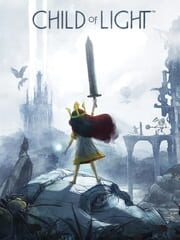
- against Child of Light 50% 2 duels played · 117 points behind
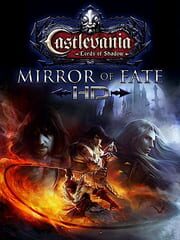
- against Castlevania: Lords of Shadow - Mirror of Fate HD 100% One duel played · 7 points ahead
- against Spelunky Classic 100% One duel played · 46 points ahead



In the same genre
All Platformer games →



Keep exploring
Around this spot
The games Strider sits between in the world ranking.
More games from Capcom







The standing
Where Strider ranks
The world rank mixes every family of games. Here is where Strider stands in each of the ones it belongs to. Its best standing, all families considered: 12 out of 23 (1989).
| Ranking | Position | Games competing |
|---|---|---|
| World ranking | 2,818 | 5,035 |
| Platformer | 347 | 620 |
| 1980s | 75 | 155 |
| 1989 | 12 | 23 |
The community
The debate
0 comments
Posting requires an account: log in or sign up.
The debate is yours to open.
Nobody has spoken up about this game yet. Say what it's worth, and the thread starts here.
See the whole Strider debate →