

 Français
  English
 Español
 The community says
The six button layout still teaches better spacing than most modern fighters bother to. Special move inputs feel deliberate, not accidental, and that alone…
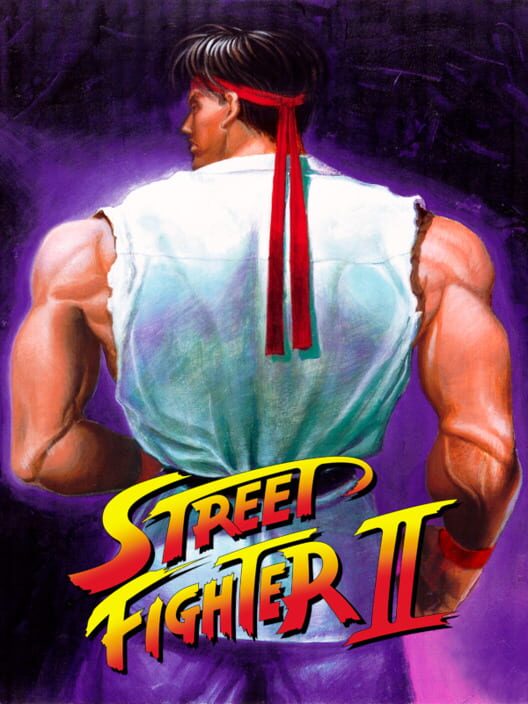
Game entry
1991 · Fighting, Arcade · Arcade · Capcom
GameForever voters place Street Fighter II no. 424 in the world ranking, with 1,715 ELO points and 80% of wins across 232 duels settled. Against Super Smash Bros. Melee, the opponent it meets most often, the tally stands at 3 wins to 2 losses in 5 duels. Its best standing outside the world ranking: no. 5 out of 45 (1991).
World rank
no. 424
ELO score
1,715
Wins
80%
Duels played
232
A sequel to Street Fighter, Street Fighter II improved upon the many concepts introduced in the first game, including the use of command-based special moves and a six-button configuration, while offering players a selection of multiple playable characters, each with their own unique fighting style and special moves.
Street Fighter II is credited with starting the fighting game boom during the 1990s. Its success led to the production of several updated versions, each offering additional features and characters over previous versions, as well as many home versions. Some home versions of the Street Fighter II games have sold millions of copies, with the SNES port of the first Street Fighter II being Capcom's best-selling consumer game of all time as of 2008.
Street Fighter II follows several of the conventions and rules already established by its original 1987 predecessor. The player engages opponents in one-on-one, close-quarters combat in a series of best-of-two-out-of-three matches. The objective of each round is to deplete the opponent's vitality before the timer runs out. If both opponents knock each other out at the same time or the timer runs out with both fighters having an equal amount of vitality left, a "double KO" or "draw game" is declared. Additional rounds will be played until sudden death. In the first Street Fighter II, a match could last up to 10 rounds if there was no clear winner; this was reduced to 4 rounds in the Champion Edition and onward. If there is no clear winner by the end of the final round, then either the computer-controlled opponent will win by default in a single-player match, or both fighters will lose in a 2-player match.
After every third match in single-player mode, the player will participate in a "bonus game" for additional points. The bonus games include (in order) a car-breaking event; a barrel-breaking bonus game where the barrels are dropped off from a conveyor belt above the player; and a drum-breaking bonus game where drums are flammable and piled over each other. The bonus games were removed from the arcade version of Super Street Fighter II Turbo.
As in the original, the game's controls use an eight-directional joystick and six attack buttons. The player uses the joystick to jump, crouch, move the character towards or away from the opponent, and guard against the opponent's attacks. There are three punch buttons and three kick buttons, each with varying strength and speed (Light, Medium, and Heavy). The player can perform a variety of basic moves in any position, including grabbing/throwing attacks, which were not featured in the original Street Fighter. Like in the original, the player can perform special moves by inputting a combination of directional and button-based commands.
Street Fighter II differs from the original in that it features multiple playable characters, each with distinct fighting styles and special moves. Additionally, the player can "cancel" an animation by performing another move, enabling combinations of basic and special moves. Both of these features would be expanded upon in subsequent installments.
The community says
The six button layout still teaches better spacing than most modern fighters bother to. Special move inputs feel deliberate, not accidental, and that alone…
Score moved from 1,500 to 1,715 ELO points over the last 170 days.
Direct record on the most played match-ups.
The games Street Fighter II sits between in the world ranking.
The standing
The world rank mixes every family of games. Here is where Street Fighter II stands in each of the ones it belongs to. Its best standing, all families considered: 5 out of 45 (1991).
| Ranking | Position | Games competing |
|---|---|---|
| World ranking | 424 | 5,035 |
| Fighting | 14 | 259 |
| 1990s | 79 | 659 |
| 1991 | 5 | 45 |
The community
39 comments






Cortez_1998
The six button layout still teaches better spacing than most modern fighters bother to. Special move inputs feel deliberate, not accidental, and that alone justifies its spot here.
LootSniper28
Le spacing dont tu parles, c'est vraiment ce qui manque le plus aux jeux récents ? Ça expliquerait beaucoup de choses pour son classement.
suzanne16
It gave us the template every fighting game still copies in some form, even if the copies got flashier. That alone earns it a real spot on this list, not just a nostalgic footnote.
NovaAce2
Melee copied the homework fr
Élodie_44
Replying to NovaAce2
Le côté enthousiaste se comprend, mais Melee a construit un système de mouvement que ce jeu n'a jamais cherché à avoir.
Craig_2007
I remember standing in a dark arcade with a roll of quarters, watching a guy nobody could beat run the whole row of cabinets. He was basically the LOCAL celebrity for a summer. Nostalgia does half the work when people rank this thing, I'm not gonna pretend otherwise.
VinylRex
Funny how the machine falling apart is half of what people remember fondly now.
TurboLegend
Le côté local celebrity, ça je veux bien le croire, mais est-ce que ça dit vraiment quelque chose sur le jeu ou juste sur l'ambiance des salles à l'époque ?
LuckyDragon2
Replying to casas_ander
Same feeling here honestly
casas_ander
Yo también sentí eso alguna vez con otros juegos (aunque acá el porcentaje de victorias habla solo).
CritWolf55
People keep voting nostalgia over relevance, that's fine, but Melee and Ultimate actually get played competitively today.
LootNinja25
My older cousin was the one who taught me the fireball motion, took me weeks to land it on purpose instead of by accident, still proud of that.
QuestDragon93
Weeks well spent. Mortal Kombat never demanded that kind of patience from anyone.
Thiel1995
Weeks to land a fireball on purpose, that's basically a rite of passage, I bet Mortal Kombat players never had that patience test.