

 Français
  English
 Español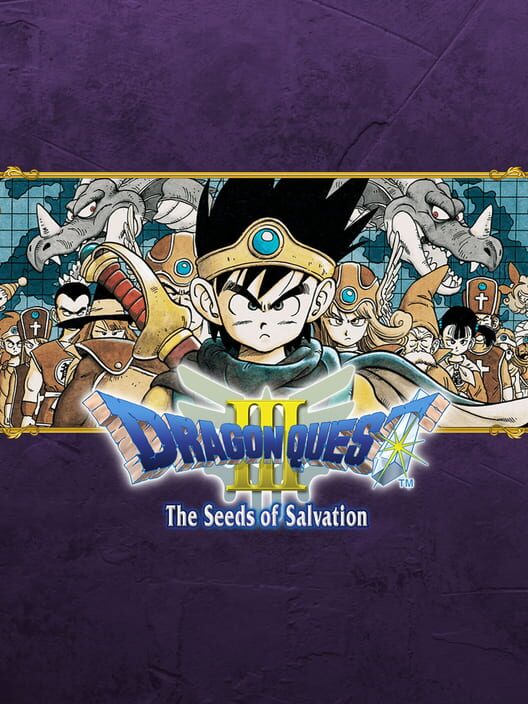
Game entry
Dragon Quest III: The Seeds of Salvation
2009 · JRPG, Sandbox, Strategy, Adventure · PlayStation 4, Nintendo 3DS, Nintendo Switch, iOS, Android, Legacy Mobile Device · Square Enix
Dragon Quest III: The Seeds of Salvation holds position no. 2,706 in the world ranking on GameForever, with 1,466 ELO points and 35% of duels won out of 72 played. In its strongest family it holds position no. 89 out of 160 (2009).
World rank
no. 2,706
ELO score
1,466
Wins
35%
Duels played
72
About Dragon Quest III: The Seeds of Salvation
Dragon Quest III is noted for greatly expanding upon the original Dragon Warrior and Dragon Warrior II. The game uses basic console role-playing game conventions, such as leveling up by gaining experience points and equipping items. Battle is turn-based like the other games in the series.
Dragon Warrior III features a class system, in which each character has a certain class. While the Hero always keeps the Hero class, the other characters can choose among the following: Soldier (Warrior in the GBC version), Fighter, Pilgrim (Cleric), Wizard (Mage), Merchant (Dealer), Goof-Off (Jester), Sage, and Thief which was available only in the later versions. The choice of class greatly affects the character's stats and spells he or she can learn. Furthermore, upon reaching experience Level 20, a character has the option of changing classes at the temple of Dhama, found halfway through the game. The game starts with just the Hero in the party, who then is able to recruit a party of three at the local tavern. Unlike most Dragon Quest parties, aside from the Hero, the party is not made up of characters involved in the story. Although only four characters can be in the party at a time, extra members of the party can be kept at the tavern, allowing room for new recruits. Another innovation is an arena where the player can place bets on the outcome of monster battles.
The remakes incorporated some interface changes from later games in the series, such as simplified door opening; the bag, which replaced bank item storage; the item sorting "Tidy Item" and "Tidy Bag" commands; and the "Full HP" command, which can be used outside of combat to automate the process of casting healing and status restoring spells.
While the earlier Dragon Quest games were also non-linear, Dragon Quest III was the most substantial example of open-world gameplay among the early Dragon Quest games. It also allowed the player to swap characters in and out of the party at will, and another "major innovation was the introduction of day/night cycles; certain items, characters, and quests are only accessible at certain times of day."
ELO progression
Score moved from 1,500 to 1,466 ELO points over the last 170 days.
Head-to-head
Direct record on the most played match-ups.
- against Final Fantasy VIII 50% 2 duels played · 237 points behind
- against Final Fantasy III 50% 2 duels played · 359 points behind
- against Final Fantasy IX 0% 2 duels played · 444 points behind
- against Shadow Hearts: Covenant 100% One duel played · 14 points ahead
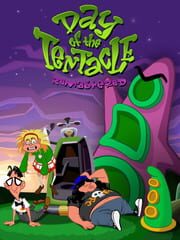
- against Day of the Tentacle Remastered 100% One duel played · 118 points behind

In the same genre
All JRPG games →
Keep exploring
Around this spot
The games Dragon Quest III: The Seeds of Salvation sits between in the world ranking.
- 2,703 Ratchet & Clank: All 4 One 1,466
- 2,704 Tom Clancy's Ghost Recon Advanced Warfighter 2 1,466
- 2,705 Trine Enchanted Edition 1,466
- 2,706 Dragon Quest III: The Seeds of Salvation 1,466
- 2,707 Terminator Salvation 1,466
- 2,708 Viva Piñata 1,466
- 2,709 Shadow Fight 2 1,466
More games from Square Enix


The standing
Where Dragon Quest III: The Seeds of Salvation ranks
The world rank mixes every family of games. Here is where Dragon Quest III: The Seeds of Salvation stands in each of the ones it belongs to. Its best standing, all families considered: 89 out of 160 (2009).
| Ranking | Position | Games competing |
|---|---|---|
| World ranking | 2,706 | 5,035 |
| JRPG | 159 | 228 |
| 2000s | 739 | 1,308 |
| 2009 | 89 | 160 |
The community
The debate
0 comments
Posting requires an account: log in or sign up.
The debate is yours to open.
Nobody has spoken up about this game yet. Say what it's worth, and the thread starts here.
See the whole Dragon Quest III: The Seeds of Salvation debate →